.gif)



News
-
April 23, 2026
How To Use AI For Social Media Marketing
written by

Table of Contents
How AI can be used in social media
Create and manage social media content
Find new audiences, trends and topics
Provides analytics and insights
In today's digital age, where trends evolve rapidly and consumer behaviour is more unpredictable than ever, businesses are seeking innovative ways to stay ahead of the curve. This quest has led to the fusion of AI and social media marketing — a formidable alliance reshaping how brands connect, engage, and convert in the virtual realm.
For a deeper look at how these technologies are reshaping online engagement, read about the impact of AI on social media.
In this article, we’ll unravel how to use AI for social media marketing by breaking down the latest strategies, tools, and techniques that harness the power of artificial intelligence. Whether you’re a seasoned marketer looking to amplify your campaigns or a budding entrepreneur aiming to make your mark, understanding the synergy between AI and social media can give you a competitive edge.
In 2025, AI has become an integral part of digital marketing workflows, with over 80% of marketers using tools like ChatGPT, Canva Magic Studio, and FeedHive to plan, create, and analyse social campaigns. These technologies not only streamline repetitive tasks but also help businesses stay creative, consistent, and competitive in a rapidly changing content landscape.
How AI can be used in social media
Social media marketers are often turning to AI tools to make their job more efficient. Once you’ve learnt more about what is the AI trend, it’s time to get stuck into how you can actually utilise it to benefit you. Believe it or not, we infuse AI into a range of our marketing services to automate different aspects of social so we can spend more time on the things that matter the most.
Artificial Intelligence has a powerful ability to analyse and generate an array of content, and for this reason, there is a growing positive impact of AI in social media. Keep reading to find out more about how you can bring AI into your social media marketing.

Automate processes
AI can automate a wide range of processes across various industries and domains. In the context of social media marketing, here are some processes that can be automated by AI. For a practical breakdown of the best tools designed for these tasks, explore our guide to AI tools for social media management:
- Content Scheduling: AI can analyse historical data and user behaviour to determine the best times to post on social media platforms. It can then schedule posts automatically to ensure consistent and timely content sharing.
- Chatbots and Customer Service: AI-powered chatbots can handle routine customer queries, provide instant responses, and even guide users through troubleshooting processes, offering 24/7 support without human intervention.
- Data Analysis: AI can quickly process and analyse large volumes of data to extract insights, trends, and patterns. This is particularly useful for monitoring social media metrics and deriving actionable insights from user engagement data.
- Social Listening: AI tools can monitor social media platforms for mentions, discussions, and sentiment related to your brand or industry. This allows you to stay informed about public perception and adjust your strategies accordingly.
- Automated Ad Campaigns: AI can optimise ad campaigns by adjusting targeting parameters, budgets, and ad placements based on real-time performance data. This ensures that your ads reach the right audience and generate maximum impact.
- Content Recommendations: AI algorithms can analyse user preferences and behaviours to recommend relevant content, products, or services. This personalization enhances user experience and encourages engagement.
- Image and Video Analysis: AI can automatically tag and categorize images and videos, making it easier to manage and organize visual content. It can also recognize specific objects or scenes, allowing for more accurate content labelling.
- Sentiment Analysis: AI can assess the sentiment behind user comments and interactions, providing insights into how audiences are responding to your content or brand.
- Automated Reporting: AI can generate regular reports summarizing social media performance metrics, campaign results, and other key indicators, saving time and effort in manual report creation.
- Content Generation: AI-powered tools can assist in generating captions, headlines, and even full articles based on specific prompts or topics, streamlining the content creation process.
- Hashtag Suggestions: AI can recommend relevant and trending hashtags for your posts, improving their discoverability and engagement potential.
These are just a few examples of the many processes that can be automated with the help of AI. By automating repetitive and data-intensive tasks, businesses can focus their efforts on strategic planning, creativity, and building deeper connections with their audience.
AI is Cost-effective
One of the most exciting sides of using AI in the social media marketing industry, is that using AI can actually be highly cost-effective. AI’s speed in data analysis and completing automated tasks can be a huge time-saver! Here are some reasons why AI can save you so much time:
Efficiency in Data Analysis: AI can process and analyse large volumes of data far faster than humans can. This efficiency translates to quicker insights, allowing marketers to make informed decisions promptly without dedicating excessive time and resources to manual data crunching.
Automated Tasks: AI can handle repetitive and time-consuming tasks, such as scheduling posts, responding to routine customer inquiries, and generating reports. This reduces the need for manual labour and frees up human resources for more strategic and creative endeavours.
Optimised Advertising: AI can optimise advertising campaigns by adjusting targeting parameters and budgets based on real-time performance data. This prevents wastage of ad spend on ineffective strategies and ensures that your advertising budget is allocated efficiently.
Personalization at Scale: AI can analyse user behaviour and preferences to tailor content and recommendations individually. This personalized approach can lead to higher engagement rates and conversions without requiring extensive manual customization.
Reduced Human Errors: Automated processes powered by AI are less prone to human errors. This minimizes the chances of costly mistakes in areas like data entry, ad targeting, and customer interactions.
24/7 Availability: AI-powered chatbots and automated systems can provide round-the-clock support to users without incurring additional labour costs associated with hiring and maintaining a large customer service team.
Predictive Insights: AI's ability to predict trends and outcomes can help marketers allocate resources more effectively, avoiding unnecessary expenditures on strategies that might not yield the desired results.
Content Creation and Scheduling: AI can assist in generating content ideas, headlines, and even complete posts, speeding up the content creation process. Additionally, AI-powered scheduling tools can optimise posting times, ensuring consistent engagement without requiring manual intervention.
Competitor Analysis: AI can quickly analyse competitors' strategies, content, and performance metrics, providing valuable insights for your own marketing efforts without investing substantial time and effort in manual research.
Resource Allocation: AI-driven insights can help marketers identify which platforms, content types, and strategies are most effective for their target audience. This prevents wasting resources on avenues that don't yield significant returns.
In short, AI doesn’t just save money — it saves your sanity.
AI for Audience Targeting and Personalization
AI’s ability to understand audience behaviour has become one of its most powerful marketing advantages. Using real-time engagement data, tools like Meta Advantage+, Canva’s Audience Insights, and FeedHive Predictive Targeting can test multiple creatives simultaneously, identifying which tone, image, or video drives the highest conversion.
Beyond ads, personalization now extends to organic content. AI tools automatically adjust captions, post timing, and even colour palettes to match audience preferences — creating an experience that feels uniquely tailored to each follower.
Featured AI Tools You Should Know
If you’re looking to bring AI into your social media workflow, a few tools are leading the charge in 2025.
- FeedHive – Automates content scheduling, post recycling, and performance tracking with smart conditional posting.
- Canva Magic Studio – Creates on-brand visuals, captions, and even short-form videos using text prompts and templates.
- Predis.ai – Transforms blog snippets or captions into full carousels, videos, and social-ready posts tailored to each platform.
- Buffer AI Assistant – Suggests post ideas, best publishing times, and trending hashtags to maximize engagement.
- Zapier + ChatGPT – A powerful combo for automating workflows, from drafting posts to analyzing engagement data.
Each of these platforms helps streamline daily tasks, freeing up time for strategy and creativity.
For a deeper comparison and recommendations by use case, check out our full guide on AI Tools for Social Media Management.
Create and manage social media content
In addition to static posts, AI now supports full video and carousel creation. Tools like Adobe Express, Predis.ai, and FeedHive can automatically transform a caption, idea, or blog snippet into a short-form video or multi-slide post optimised for each platform. This automation helps brands maintain a cohesive visual identity across every channel with minimal manual editing.
On the content creation front, AI-driven tools excel at generating ideas, headlines, and even complete posts. Using natural language processing (NLP), these platforms analyse audience trends and engagement patterns to create content that resonates on a personal level.
Beyond text, AI extends its creativity to visual content — generating graphics, producing AI-generated social media images, and even creating branded videos aligned with your tone and message. Personalisation is another major strength, with AI tailoring recommendations to individual preferences to drive higher engagement and build stronger audience connections.
If you’re exploring creative options, check out our guide to the Top AI Generators for Social Media Posts to see which tools are leading the way.
In the realm of content management, AI-powered scheduling tools use historical engagement data to automate posting at the best times for your audience. This ensures consistent visibility and maximises reach. AI’s social listening features also help identify trending topics, audience sentiment, and conversations relevant to your brand. With these insights, you can create content that joins timely discussions and positions your brand as a thought leader.
Finally, AI’s hashtag suggestion systems boost discoverability by recommending keywords and phrases trending in your niche — connecting your content to a wider audience with every post.
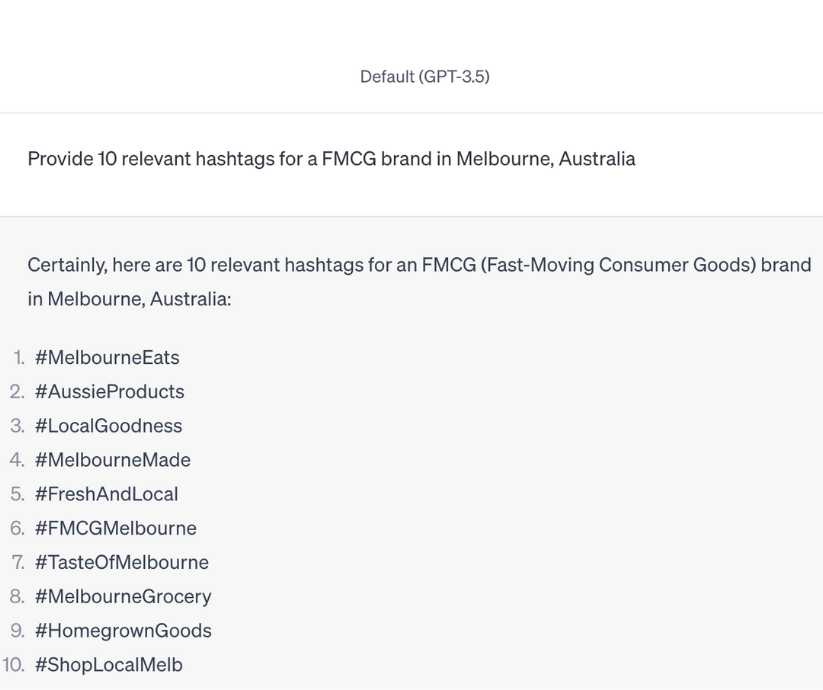
How to Get Started with AI for Social Media Marketing
If you’re new to using AI, begin with one task you’d like to simplify — such as content scheduling, caption writing, or analytics. Test a single AI tool that solves that specific need.
Once comfortable, expand gradually by integrating automation across multiple parts of your workflow. The key is balance: let AI handle repetitive processes while you focus on creative direction, storytelling, and brand tone.
Over time, this combination of automation and human creativity builds more authentic, scalable social media strategies.
Strategy advice
When it comes to how to use AI for social media marketing, it’s important to know that AI can provide invaluable social media strategy advice by analysing vast amounts of data, identifying trends, and deriving actionable insights. Through this data-driven approach, AI can offer recommendations on optimal posting times, content types, and audience targeting. By understanding user engagement patterns and sentiment analysis, AI can suggest which topics are resonating with the audience, helping marketers create more relevant and engaging content.
Moreover, AI's ability to track competitor strategies and industry trends allows it to provide insights into emerging opportunities and potential gaps in your strategy, empowering you to make informed decisions that align with your overarching marketing goals.
Find new audiences, trends and topics
AI can uncover new audiences, trends, and topics by analysing vast datasets to identify patterns and correlations that might not be apparent through traditional methods. Through data mining and social listening, AI can discover emerging conversations and trends within your industry or niche. For instance, platforms are constantly adapting — take a look at the AI trend on Instagram to see how creators are using these tools in real-time.
Artificial Intelligence machine learning algorithms also gather copious amounts of data about the audiences that are likely to respond to your brand. By understanding the characteristics and preferences of your existing audience, AI can also help identify similar demographics or segments that might be untapped.
This enables you to expand your reach and connect with new potential customers. Additionally, AI's ability to process and analyse real-time data allows it to swiftly identify shifts in user behaviour and preferences, enabling you to stay ahead of the curve and engage with trending topics that resonate with your target audience.

Content research
AI offers substantial assistance in content research by efficiently analyzing vast amounts of data, extracting relevant information, and providing insights that inform your content strategy.
Through natural language processing (NLP) algorithms, AI can scan articles, blogs, research papers, and other textual sources to identify key themes, trends, and statistics. It can summarize complex information into digestible formats, allowing you to quickly grasp the essence of a topic and gather valuable insights without spending excessive time on manual research. AI-powered tools can also identify credible sources and help fact-check information, ensuring the accuracy and reliability of the content you produce.
If you’re comparing different AI platforms for this purpose, our analysis of DeepSeek vs ChatGPT for social media breaks down how each performs when generating or analysing content.
Furthermore, AI's ability to recognize patterns and connections across diverse sources enables it to highlight gaps in existing content and suggest new angles to explore. By analyzing user engagement metrics and sentiment around certain topics, AI can pinpoint subjects that resonate with your target audience. This data-driven approach not only streamlines your content research process but also empowers you to create relevant and compelling content that captures your audience's attention and drives meaningful engagement.
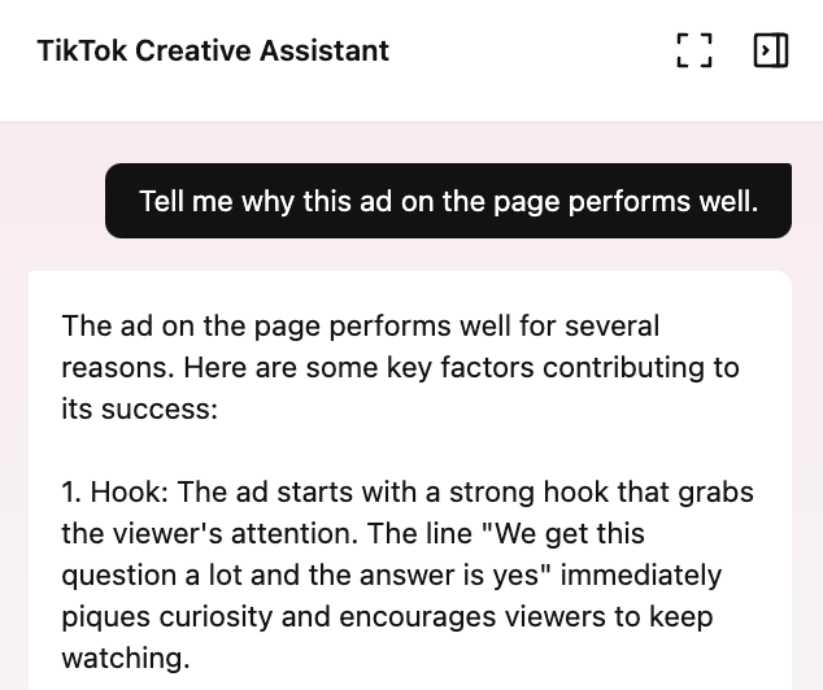
An incredible new AI feature on TikTok actually allows you to generate an analysis of top-performing TikTok ads. It offers a breakdown of why an ad is likely to have performed well, including information about the verbal, written and video content that makes the ad so powerful. This can be super helpful when researching content ideas for social media advertising.
Caption writing
Many free and paid tools available to social media marketers now offer the ability to generate captions. From ChatGPT to Canva, and even scheduling platforms like Sked, AI-generated tools are becoming a norm in the copywriting industry. These can be generated to reflect a certain tone of voice and mood, and some AI platforms will use your prompts to learn about your brand for use in more relevant future caption generation.
Image Creation
Image creation and manipulation has quickly grown in popularity and accessibility. What once seemed like a distant, futuristic concept is now available at every internet users fingertips. Some ways AI can be used for image creation include:
Image-to-Text and Text-to-Image Conversion: AI can convert textual descriptions into corresponding images and vice versa. This can be valuable for quickly generating visuals to accompany written content or capturing ideas in visual form.
Adobe Photoshop has recently introduced AI, allowing people to create and manipulate believable content with a few button clicks.
Customisation: AI can generate personalized images by incorporating specific elements, such as logos or text, into predefined templates. This is beneficial for creating branded visuals quickly and efficiently.
Style Transfer: AI algorithms can apply the style of one image (such as the brushstrokes of a famous painting) to another image, creating intriguing and unique visuals. This technique is particularly useful for producing attention-grabbing images that stand out on social media platforms.
While AI-generated images offer convenience and creativity, it's essential to ensure that the images align with your brand's message and values. Human oversight and creative input remain valuable in maintaining the authenticity and uniqueness of your visual content.
Image and video recognition
AI's image and video recognition capabilities offer substantial support to social media managers by streamlining processes, enhancing engagement, and improving content quality. Here's how AI can assist social media managers:
Efficient Content Curation: AI can quickly sift through a massive volume of images and videos to identify those that match your brand's style and messaging. This simplifies the process of finding high-quality, relevant content to share on your social media platforms.
Trend Identification: AI can detect emerging visual trends by analyzing images and videos across various platforms. Social media managers can use this insight to align their content with the latest trends, ensuring posts resonate with current online conversations.
Enhanced Engagement: AI-driven insights can identify which types of images and videos generate higher engagement rates among your audience. Social media managers can then tailor their content strategy to prioritize these formats, increasing likes, comments, shares, and overall engagement.
User-Generated Content Management: AI can automatically filter and categorize user-generated images and videos related to your brand or products. This simplifies the process of selecting and reposting user-generated content, fostering a sense of community and trust with your audience.
Identify visuals
AI’s unique ability to identify visuals can have a profound impact on how social media accounts are managed and optimised. In addition to the points above, AI can also help with the below points.
Competitor Analysis: AI can analyse visuals from competitors' social media accounts, helping marketers gain insights into their content strategies, branding choices, and engagement tactics. This competitive intelligence informs your own content creation and positioning.
Audience Engagement: AI-powered insights into visual engagement metrics allow marketers to identify which types of visuals resonate most with their audience. This information guides the creation of visually appealing content that encourages higher likes, shares, and comments.
Real-time Monitoring: AI's real-time analysis of visual content can help marketers promptly identify and respond to user-generated content, comments, and sentiments. This enables timely engagement and enhances customer relationship management.
Data-Driven Decisions: AI's ability to process and analyse large volumes of visual data provides marketers with data-driven insights. These insights guide decision-making, such as adjusting content strategies based on the performance of different visual elements.
Track global brand mentions
Yes, AI can track global brand mentions across various platforms and analyse the sentiment associated with those mentions. By employing natural language processing (NLP) and sentiment analysis algorithms, AI can monitor and assess how your brand is being discussed on a global scale.
By leveraging AI to track global brand mentions and sentiment, businesses can gain a comprehensive understanding of their global reputation, identify areas for improvement, engage with their audience more effectively, and make informed decisions to shape their brand strategy. This involves several key steps:
- Data Collection: AI systems can collect data from a wide range of sources, including social media platforms, news websites, blogs, forums, and more. This diverse dataset provides a comprehensive overview of how your brand is being mentioned across the globe.
- Mention Tracking: AI algorithms identify brand mentions through keyword recognition, variations of brand names, and context analysis. This ensures that even subtle or indirect references to your brand are captured.
- Sentiment Analysis: AI analyzes the language used in brand mentions to determine the sentiment associated with each mention—positive, negative, or neutral. This sentiment analysis provides insight into public perception and helps you gauge the impact of brand mentions.
- Geographical Tracking: Some AI tools can also provide insights into where brand mentions are originating geographically. This information can help you identify regions where your brand is gaining traction or facing challenges.
Ad Management
AI is rapidly changing the way social media advertising is managed. With Apple users able to easily opt out of tracking since the iOS14 update, marketers are more reliant on machine learning to test ads with different audiences, discover who responds well and analyse common characteristics between these people to go out and find more potential audiences.
Furthermore, TikTok is paving the way for seamless AI integration, offering audiovisual analysis of high-performing ads, AI content recommendations and even sentiment analysis.
Provides analytics and insights
Analytical Artificial Intelligence provides analysis and insights by processing vast amounts of data, identifying patterns, and extracting meaningful information. Through advanced algorithms and machine learning techniques, AI can recognize trends, correlations, and anomalies within data that might be challenging for humans to uncover.
By applying natural language processing and sentiment analysis, AI can derive sentiments and emotions from text, helping to gauge public perception. These capabilities enable AI to offer actionable insights that guide decision-making, optimise strategies, and enhance overall understanding of complex datasets, empowering businesses to make informed choices and stay ahead in dynamic markets.
The latest generation of AI tools doesn’t just report metrics — it predicts outcomes. Platforms like Hootsuite AI and Sprout Social Insights now forecast engagement trends, helping marketers identify which content types are likely to perform best before publishing. This predictive capability allows brands to refine their social media strategies proactively, ensuring every post has the best chance of resonating with its audience.
Multilingual analysis
AI can perform multilingual analysis by leveraging natural language processing (NLP) techniques that allow it to understand and process text in multiple languages. NLP models, such as those powered by neural networks, can be trained on multilingual datasets, enabling them to comprehend and analyse text in various languages. Here are some ways AI achieves multilingual analysis:
Language Identification: AI algorithms can automatically detect the language of a given text. This initial step helps the AI determine which language-specific processing rules and models to apply.
Translation: AI can translate text from one language to another, aiding in understanding content written in languages unfamiliar to the user. Machine translation tools, often powered by neural networks, enable accurate cross-lingual communication.
Sentiment Analysis: AI can assess sentiment and emotions expressed in text across different languages, allowing businesses to gauge how audiences feel about their brand or products globally.
Topic Detection: AI can identify key topics within text, regardless of the language used. This enables businesses to monitor discussions and trends across various regions and languages.
Make Accurate Predictions
AI can make accurate predictions by leveraging historical data, patterns, and statistical algorithms. Machine learning models are trained on data to learn relationships between variables. Some examples of predictions in social media include:
- User Engagement: AI can analyse past user interactions with your social media content to predict which types of posts, topics, or formats are likely to generate higher engagement in the future. This can include predicting which posts will receive more likes, shares, comments, or clicks.
- Optimal Posting Times: AI algorithms can examine historical data on user activity and engagement times to determine when your target audience is most active on social media. By identifying these optimal posting times, AI can predict when to schedule content for maximum reach and engagement.
- Content Performance: AI can predict the performance of specific content ideas or campaigns based on historical performance metrics. This helps social media managers prioritize and invest resources in strategies that are likely to yield better results.
The accuracy of AI predictions depends on the quality and quantity of data available to base predictions off. AI models require a significant amount of high-quality data for training. The more diverse and representative the data, the better the model's predictive capabilities.
Conclusion
In the dynamic landscape of social media marketing, harnessing the power of AI emerges as a game-changing strategy. This article has equipped you with the knowledge you need about how to use AI for social media marketing.
Looking ahead, marketers are asking will marketing be replaced by AI? It’s a fascinating question that highlights how this technology continues to evolve beyond content creation and analytics.
According to a 2025 Harvard Professional Studies review, AI-driven content creation has become a defining advantage for marketers who integrate automation with human oversight, resulting in faster turnaround and higher audience retention.
From efficient content creation and audience engagement to data-driven decision-making, AI's transformative capabilities are reshaping the way brands connect with their audiences. By automating tasks, predicting trends, and generating insights from vast datasets, AI empowers marketers to optimise their strategies, curate compelling content, and stay ahead in the fast-paced world of social media.
As AI continues to evolve, its ability to understand images, videos, and multilingual nuances further solidifies its role as an indispensable ally for social media managers, ensuring brands not only remain relevant but also thrive in a globally connected digital landscape. But what about tasks beyond AI's scope? Discover how to outsource social media marketing to maximize your brand's potential.But what about tasks beyond AI's scope?
FAQ
Can you use AI to create social media posts?
Yes, AI can be used to generate, schedule, and optimise social media posts by analysing trends, user engagement data, and content preferences to create compelling and timely content.
How do you use AI to automate social media?
You can use AI to automate social media by scheduling posts at optimal times, curating content, analyzing engagement data, and managing customer interactions. It identifies trends, generates insights, and personalizes content, streamlining processes for efficient and effective social media marketing.
How do AI tools help you streamline social media?
AI tools streamline social media by automating content scheduling, analyzing engagement patterns, suggesting trending topics, and managing customer interactions through chatbots. They curate relevant content, optimise ad campaigns, and offer data-driven insights, enhancing efficiency and enabling strategic decision-making.
What are the best AI tools for social media marketing in 2025?
Some of the top tools include Buffer AI, Canva Magic Studio, FeedHive, Ocoya, and Zapier ChatGPT workflows. Each offers automation, analytics, or creative support features.
How can AI improve social media advertising?
AI improves targeting and personalization by analysing real-time audience behaviour, testing creative variations, and automatically optimizing campaigns for ROI.
Can AI replace human creativity in social media marketing?
No — AI enhances efficiency and insight, but human creativity and brand understanding remain essential for authentic engagement.
Transform Your Social Media with AI
Leverage AI to streamline and enhance every aspect of your social media strategy. Click here to discover how our social media marketing and management services can revolutionize your approach, save time, and produce measurable results.
This blog post was created with the help of an AI tool, which speeds up Born Social’s publishing process. A digital marketing specialist has reviewed this content before it was published. You may report any errors to info@bornsocial.co.

about the author
Nerieda is an experienced digital advertising specialist with over three years of experience running successful paid campaigns across Meta, TikTok, and Google. She holds a Master's in Marketing Communications and a Bachelor of Arts (majoring in Psychology and Criminology) from the University of Melbourne, combining strategic marketing expertise with a deep understanding of consumer behaviour.

Social Media Management Pricing in Australia (2026 Guide)

How to Choose a Social Media Agency in Melbourne
Have a



%201.png)
%202.png)
