.gif)



Digital Advertising
-
August 27, 2026
How To Create Unlimited Social Media Ad Concepts for Businesses
written by

If you’ve ever scaled social media campaigns on platforms like Facebook(aka Meta) or TikTok, you know firsthand how quickly ad fatigue sets in. You launch a campaign that absolutely crushes it at first, but suddenly, results drop, and you're stuck scrambling for fresh ad ideas. Coming up with compelling new ad creatives can feel like running on an endless treadmill.
Trust me, I've been there. But over the years, I’ve built a system that makes it easy to consistently generate compelling ad ideas. Today, I'll share that exact framework to help you effortlessly produce countless Facebook ads and TikTok ad concepts without burning out.
If you’re still getting familiar with how paid social works across platforms, formats, and funnels, it’s worth starting with our guide to social media advertising, which covers the fundamentals before you scale creative testing.
Lets dive in.
1. The Building Blocks of an Effective Facebook Ad Concept
Every effective ad concept boils down to three core elements:
- Audience: You always start by figuring out who you’re talking to. If your audience is unclear, your message won’t land. Remember, your business may serve multiple audiences, but each ad should target only just one.
- Angle: This is the why behind your ad. It's the unique story or perspective that connects your product to your audience’s motivations, problems, or desires.
- Offer: This is simply what you're promoting: the specific product, bundle, discount, or incentive you’re presenting. Essentially, it’s what your customer gets in exchange for their money.
The magic happens when you mix and match these three elements. Just a handful of ideas in each category can quickly multiply into hundreds of social media ad concepts.
Now, let's explore each of these elements in detail and uncover ideas for each.
2. How To Define Your Target Audience For Better Performance
A clearly defined audience makes it easy to craft relevant, persuasive messages. Rather than targeting everyone broadly, it’s better to narrow down and get specific. Here are some common ways you can segment when you create Facebook or TikTok ad campaigns:
- Demographic Segmentation: Age, gender, income, education, marital status, family size.
- Geographic Segmentation: Location (country, region, city), climate, urban vs. rural, neighbourhood.
- Psychographic Segmentation: Lifestyle, values, interests, personality traits, social class.
- Behavioural Segmentation: Purchase behaviour, user status (first-time vs. repeat customers), usage frequency, brand loyalty, benefits sought.
When launching your first Facebook or TikTok ad campaigns, you’ll probably start with broad messaging since you don’t yet know exactly who will respond best. As you test, your targeting naturally becomes more precise. For example, you might initially target "pet owners" but later narrow down to "young female pet owners with picky-eating poodles" or "older single men with Labrador Retrievers" This also means you can get more and more granular with your target audience. Each group responds to different messaging, and adding specificity usually boosts ad performance.
Now, let's explore how to craft compelling angles.
3. Turning Customer Insights into Ads Angles Your Audience Can't Ignore
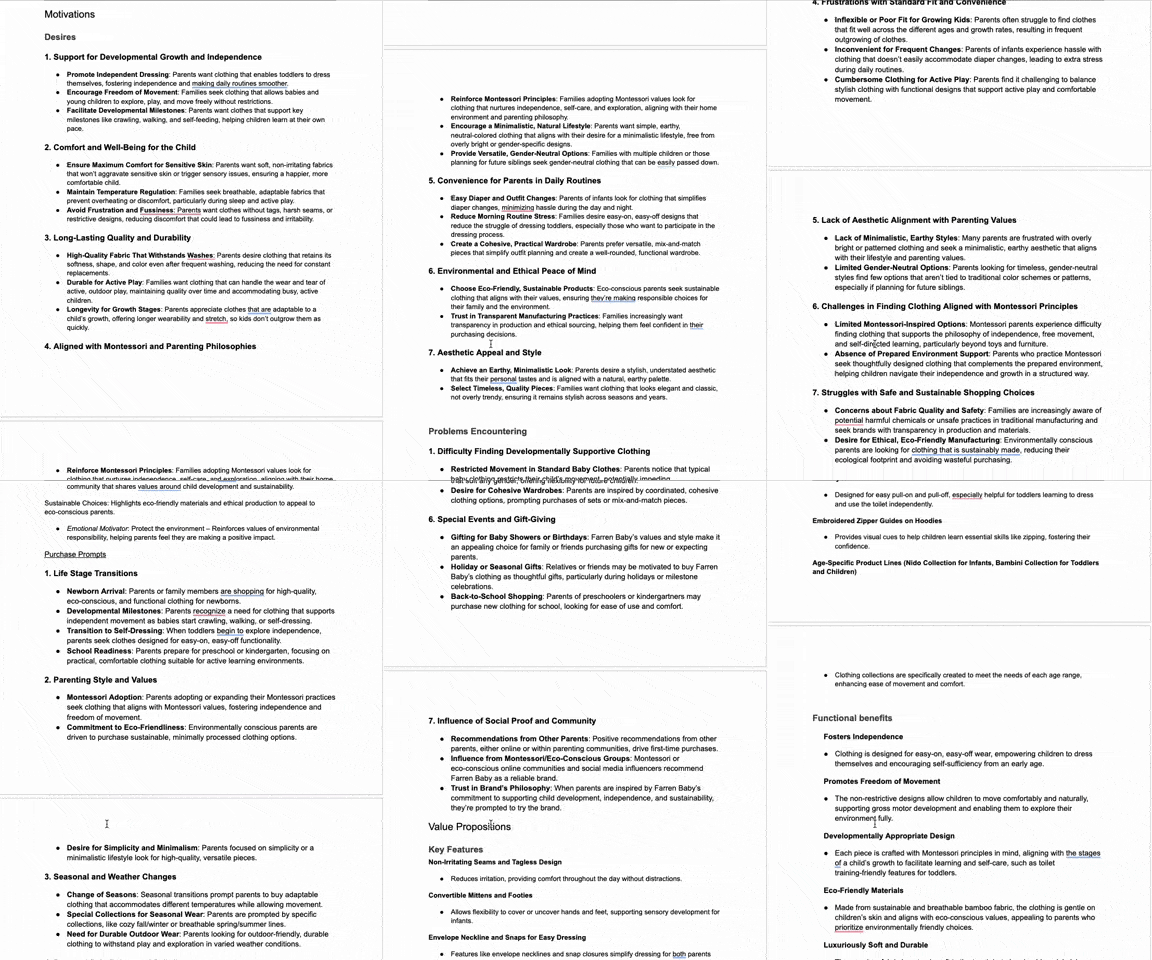
If you want to learn how to make great Facebook ads, it starts with understanding your audience better than anyone else, I use a method called Message Mining. Essentially, you read their comments, reviews and conversions, then group customer insights into three key categories: Motivations, Value Propositions, and Anxieties. Here's what you’re looking for:
- Motivations:
▫ Desired Outcomes: What specific results do your customers want?
▫ Pain Points: What challenges or frustrations are they experiencing?
▫ Purchase Prompts: What triggers them to start searching for solutions?
- Value Propositions:
▫ Unique Benefits: The advantages or positive outcomes customers receive from your product.
▫ Delightful Features: What specific product attributes make customers excited or satisfied?
▫ Dealbreaker Requirements: Features your customers absolutely must have.
- Anxieties:
▫ Uncertainties: Doubts or questions customers might have about your product.
▫ Objections: Specific concerns preventing a purchase decision.
▫ Perceived Risks: Worries about negative consequences of buying or using your product.
Every insight gives you new angles for your social media ad campaigns. I recommend keeping all these insights in a simple Google Doc or Notion page, so you can always come back to it when you need another social media ad.
Pro tip: Use ChatGPT to spark even more ad concept ideas when you're stuck.
4. The Art of Selecting Offers That Scale Your E-commerce Business
Creating offers like discounts, bundles, or special deals might seem simple at first, but choosing exactly which offer to promote can quickly get complicated. If you have 100 products, you technically have 100 potential offers, but testing them all isn't the best use of your limited resources.
Instead, your goal should be to identify and prioritise offers that both excite your customers and deliver strong profit margins. This is how you scale sustainably.
Here's how I approach this:
- Identify Your Hero Product or Products: Dig into your data to find out which products deliver the best profit over time. You might not know what it is straight away because it might require testing, but your hero product should be the one with consistent sales, strong repeat purchases, and healthy margins.Develop Premium or
- Next, think about bundling your hero product with complementary items or creating higher-value offers that encourage bigger purchases. For instance, "Buy 2, get 1 free" or "Buy this premium bundle and save 20%." These increase your average order value (AOV) and appeal to customers willing to spend more.
- Lastly, experiment with introductory offers: smaller deals that reduce initial risk for hesitant customers. Think trial-sized products, entry-level bundles, or first-time customer discounts. These help attract customers at the lower end of your market, giving them an easy reason to say “yes.”
The ultimate goal isn't to flood your ads with countless offers. Rather, you’re trying to discover the optimal pathway where customers are excited to buy and your business sees consistent, sustainable profits. When you find these ideal offers, you can focus your creative energy on testing new angles and messaging, making your marketing more efficient and effective.
5. You Have Lots of Ideas, But What Should You Test First?
By now, you should have a bunch of ideas like the ones I’ve listed out.

If you're feeling overwhelmed, don't worry. Prioritising what to test is crucial to running a successful Facebook ad scaling strategy. Let me show you exactly how I prioritise what to test using the classic Customer Awareness Framework.
This classic model breaks customers down into five levels of awareness:
Here's my approach to prioritising tests:
- If you need quick results, start with lower-funnel audiences (Most Aware, Product Aware).
- If you have room to experiment, test higher-funnel messaging (Unaware, Problem Aware) to reach new audiences.
Also, regularly review your ad account to spot gaps in your messaging. Set aside some budget each month specifically to test these unexplored areas. You might uncover hidden gems that significantly boost performance.
The key is simple: double down on what's working but always leave some room to test new ideas. That's how you continually grow and scale.
6. Stop Overthinking, Start Testing and Scaling!
I hear the question all the time: “How to create a Facebook ad that actually works?” Here’s the truth. Ad ideas aren't the bottleneck; execution is. Many ads will flop, and that’s okay. Success comes from fast testing, rapid learning, and scaling winners aggressively.
My hope is that this guide can help you smash the question of what to test and inspire you to start testing. Pick just one new ad concept today, test it, and let the results guide your next step. Every test brings you closer to discovering that winning ad that’ll carry your business to new heights.
If you're running an e-commerce business and need help managing or scaling your social media ads, don't hesitate to reach out. We’d be glad to chat and see how we can help you achieve your goals.
Happy testing!

about the author
Nerieda is an experienced digital advertising specialist with over three years of experience running successful paid campaigns across Meta, TikTok, and Google. She holds a Master's in Marketing Communications and a Bachelor of Arts (majoring in Psychology and Criminology) from the University of Melbourne, combining strategic marketing expertise with a deep understanding of consumer behaviour.

Social Media Management Pricing in Australia (2026 Guide)

How to Choose a Social Media Agency in Melbourne
Have a



%201.png)
%202.png)
